News
-
The Architects of Indoor Nature: Celebrating the International Interior Landscaper Day Tuesday, 14 April 2026
-
International Interior Landscaper Day 15 April Thursday, 09 April 2026
-
World Health Day 2026: Why Botanical Spaces are Essential for Public Health Tuesday, 07 April 2026
plants@work
The Ides of March and the First Day of Spring
In the ancient Roman calendar, the Ides of the month fell on the 15th day of March, May, July, or October or the 13th day of all the other months. The 15th March was also the first day of spring; definitely something to celebrate after the long dark days of winter.

Bluebell woods herald Spring
In pre-Christian Rome, the Ides of March was an important religious date and was celebrated as a day to honour the god, Jupiter. This day was part of a larger tradition in which the middle, or Ides, of each month, was dedicated to the worship of Jupiter, the King of gods.
Of course most of us know the Ides of March because of Shakespeare’s play Julius Caesar who was told to ‘Beware the Ides of March’ by a Soothsayer in Act 1. Caesar ignores the warning and is assassinated in the Senate on the Ides of March.

Julius Caesar by Shakespeare featuring the Ides of March and Caesar's assassination
Fortunately today spring doesn’t herald such dire memories. It is the Spring Equinox (when day and night take up the same amount of time) that marks the start of Spring ‘when the sun passes north over the celestial equator, a notional equator that extends out from the Earth’s actual equator’. This happens on March 20, which marks the first official day of astronomical spring in the Northern Hemisphere. The Meteorological first day of spring is on March 1 based on annual temperature cycles.
No wonder we’re confused!


Narcissus (courtesy of Farmer Gracy & Pexel)
According to the Met Office, the spring equinox marks the beginning of astronomical spring and, from this day forward, days are longer than nights.


Tullips (Courtesy of Farmer Gracy and Pexel)
What most of us recognise as the first day of spring comes at the end of March when the clocks ‘spring’ forward and the days lengthen to let us enjoy light evenings!

Muscari aka Grape Hyacinths (Farmer Gracy)
Of course, once spring arrives it’s time for spring plants and flowers to appear offering a cheering vibe to the time of year. In gardens – and some in the wild – this means Primroses, the many varieties of Narcissus, Tulips, Muscari, bluebells, Hyacinths, Anemones, Fritillaria, Iris, Allium, pansies and tree blossoms including Forsythia.


Forsythia and Cherry Blossom (Wikipedia & Pexel)
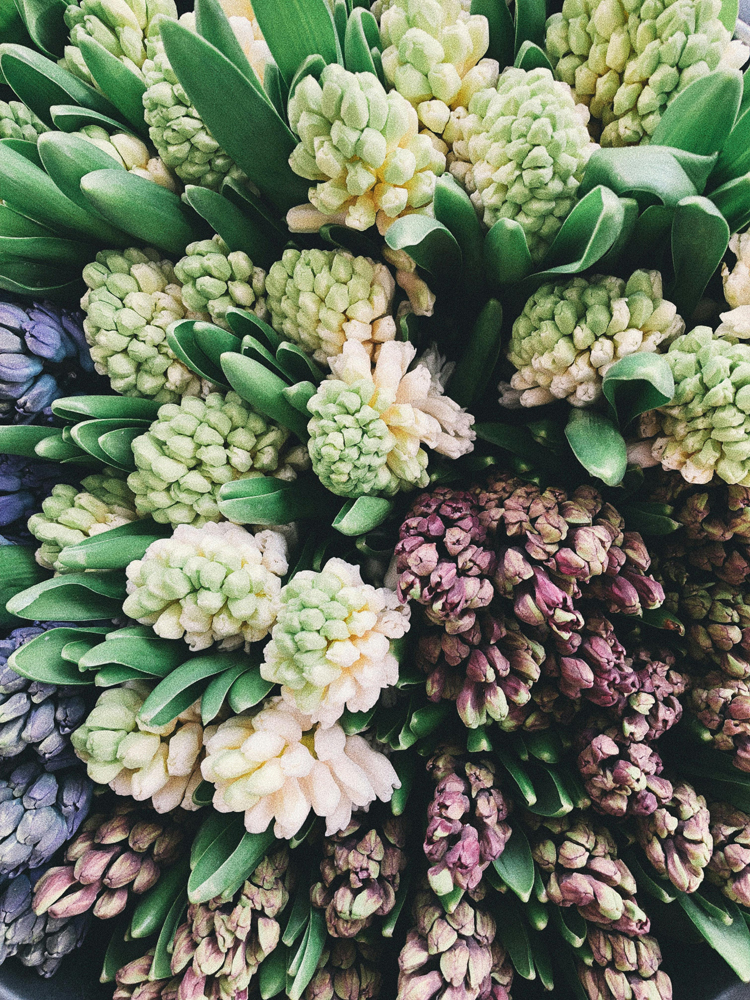
Hyacinths (Pexel)