





Welcome to plants@work
Welcome to the Plants at Work (formerly efig ltd) website - the association representing Interior Landscapers by promoting the use and benefits of Interior Plants.
There are many benefits of joining us, including:
- Industry Representation
- Great Business Opportunities
- Fantastic Training Programme
- Networking



Who We Are
News
-
Valentine’s Day – the love of plants Friday, 13 February 2026
-
Valentine’s Day Gift Guide: The Perfect Plants for Your Plant-Loving Partner Friday, 06 February 2026
-
Ian Drummond Awarded "Best in Horticulture" at the 2025 UK Business Awards Friday, 16 January 2026
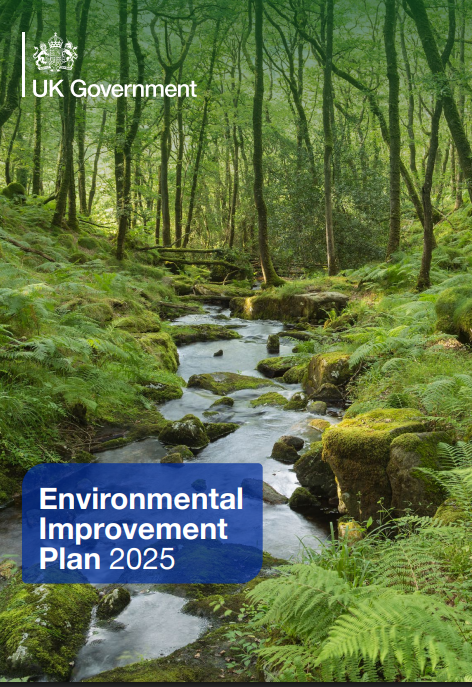
What the Environmental Improvement Plan 2025 Means for the Interior Landscaping Industry
The UK Government has released its Environmental Improvement Plan (EIP) 2025 on 1 December. At first glance, this strategy for the great outdoors heavily focuses on halting species decline, restoring river health, and expanding forestry across the nation. However, the core principles of this ambitious government roadmap—sustainability, biosecurity, and the explicit link between nature and human wellbeing—do not stop at the building’s threshold. Though the interior environment is largely unaddressed in the plan’s specific targets, its underlying themes may create a mandate for the interior landscaping sector, translating broad environmental goals into specific commercial opportunities.
From supply chain disruptions regarding peat and plant imports to a strengthened business case for biophilic design in schools and offices, this report outlines how the new government strategy will reshape the indoor horticulture sector.
The End of Peat: A Legislative Certainty
For years, the horticulture industry has been moving voluntarily away from peat, but the EIP 2025 signals the end of the transition period. The government has explicitly committed to "legislate for a ban on the sale of peat and peat-containing products when parliamentary time allows" to protect carbon stores in peatlands.
Industry Impact:
Interior landscapers who have not yet switched to 100% peat-free media must do so immediately.
Biosecurity
The interior landscaping industry relies on tropical plants, the vast majority of which are imported from the EU or further afield. The EIP 2025 takes a hard line on biosecurity. The plan sets a target to "reduce the rate of establishment of invasive non-native species (INNS) by at least 50% by 2030." It also highlights a rigorous Sanitary and Phytosanitary (SPS) imports regime to prevent pests and diseases.
Industry Impact
Slower Borders: Expect rigorous checks on imported plant material. This could lead to potential delays in the supply chain, requiring longer lead times for project installations.
Cost Increases: Compliance costs at the border may filter down to the wholesale price of plants.
A Biophilic Design in Public Spaces
Perhaps the most positive takeaway for the industry is the government’s validation of biophilic design as a tool for public health. The EIP emphasises connecting people with nature to reduce burdens on the NHS. Specifically, it mentions:
-
"Biophilic Pilot Schools": Evaluating the health and wellbeing benefits of green infrastructure in new school buildings.
-
Green Social Prescribing: Continuing programmes that use nature-based activities to treat mental health conditions.
-
Workplace Greening: Encouraging nature-friendly gardening in workplaces.
Industry Impact:
Although the interior environment was not mentioned in the report specifically, but the government commitment may move interior planting from "aesthetic decoration" to "essential infrastructure." If the government standardises biophilic design in education and healthcare construction, it may open a new market for interior landscapers beyond the corporate office sector.
Urban Cooling and Climate Adaptation
As heatwaves become more frequent, the role of plants in temperature regulation is highlighted. The plan focuses on "Urban Cooling" to mitigate extreme heat in towns and cities.
Industry Impact:
While often associated with outdoor trees, this applies to large-scale interior atriums and green walls. Interior landscapers can now market living walls not just as visual features, but as functional climate adaptation tools that cool buildings, reduce air conditioning loads, and improve air quality.
The strategic outlook is positive. By formally linking nature with productivity, education, and health, the government has effectively written the business case for the next decade of interior landscaping.